The Gus J. Solomon United States Courthouse
Behind these
doors,
Portland
changed.
A post office, a seat of justice, a city within a city. For generations, Portland met the federal government here—and sometimes challenged it.
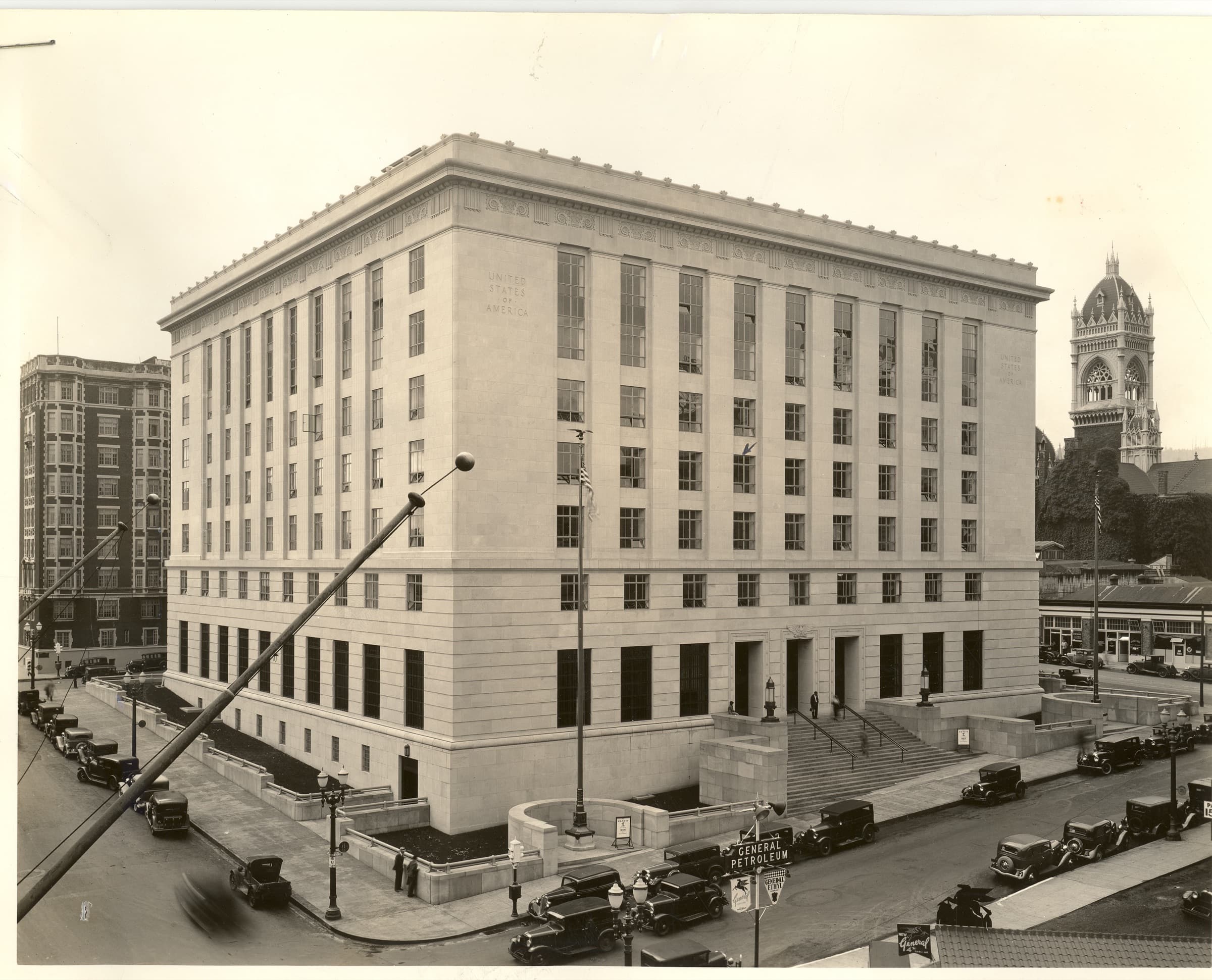
Step inside.
Beyond the sandstone is a world of marble, bronze, carved wood, and carefully ordered lives. Choose a room. Start looking.
Choose your way in
Marble underfoot. Bronze at the counter. Even buying a stamp was a civic occasion.
Walk through the lobbyTwenty-four feet of height, carved oak, and a room built to make every word matter.
Enter the courtroomOrbit the building, separate its floors, and follow the archival evidence into its rooms.
Explore in 3D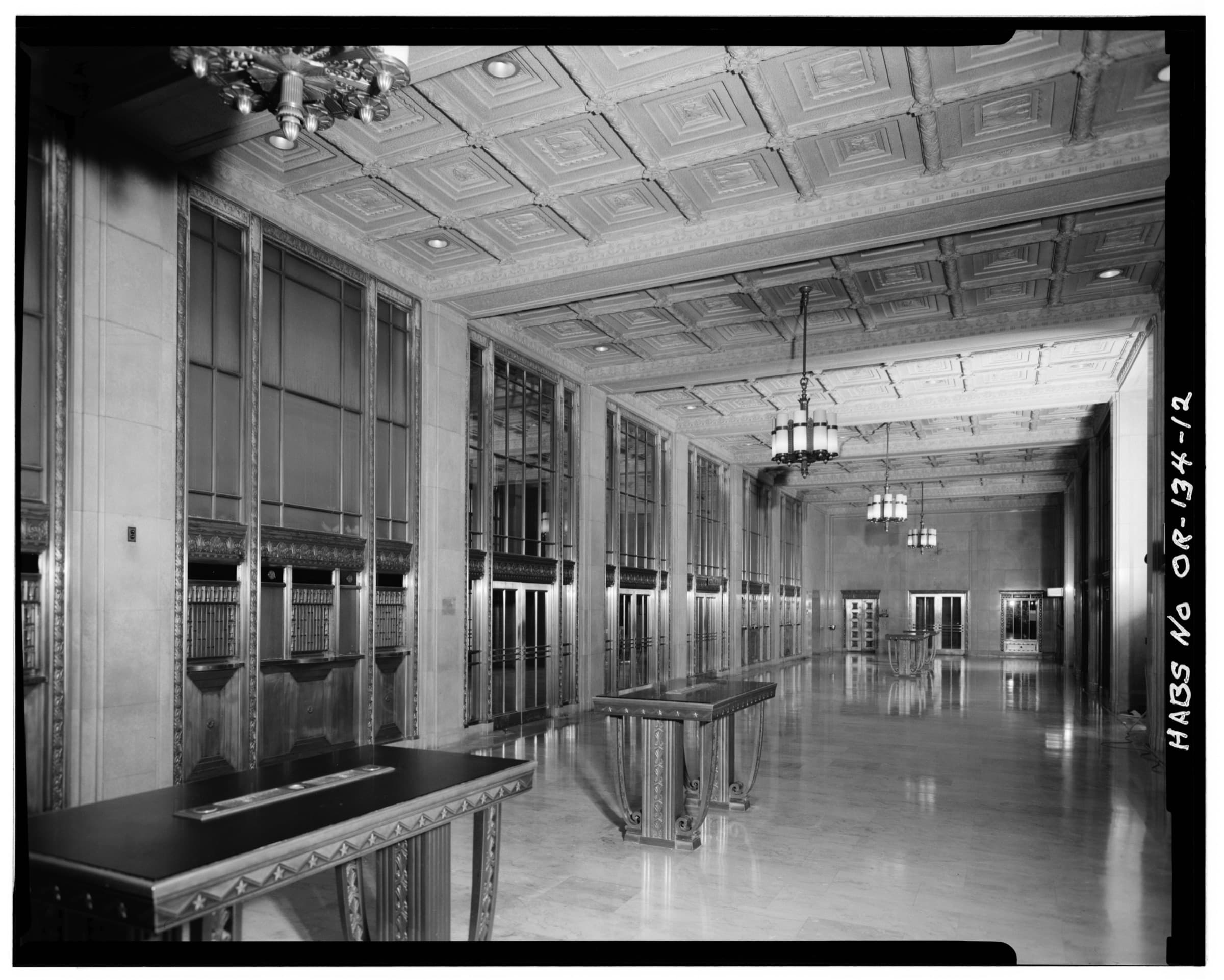
Before it
was stone.
Look closely. The drawings preserve a building down to its last bronze profile—and rooms that later disappeared.
464blueprint photographs
10 archival folders · One extraordinary building
The whole elevation
Before the stone was cut, every window, pilaster and cornice had a place on paper. This is the Broadway façade, down to the sidewalk and foundations.
Read the drawing’s story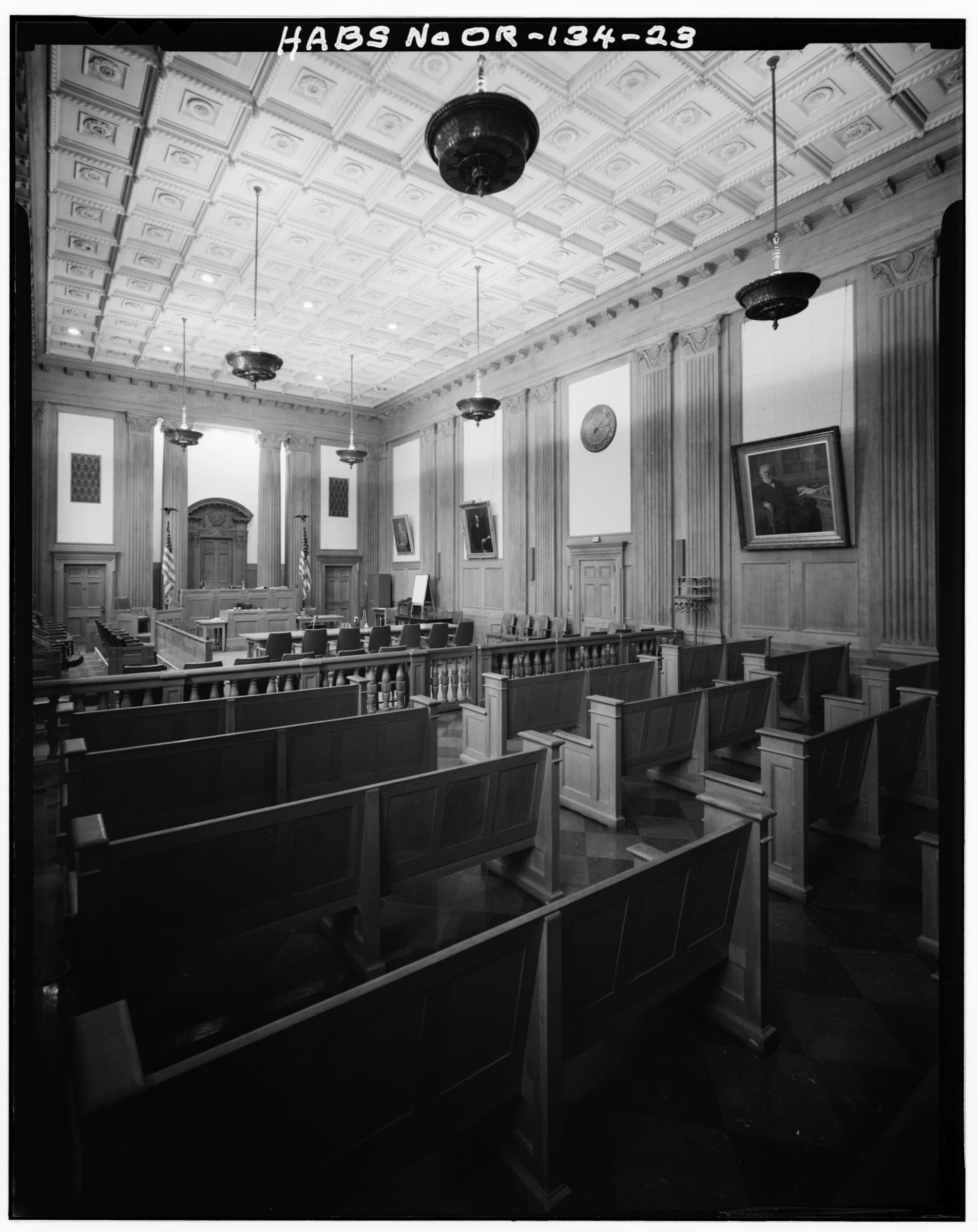
Twenty-four feet high.
Sixty-four years of federal law.
What happened
in these rooms.
The building held more than proceedings. It held arguments over citizenship, privacy, and who gets a share of a river.
1942 · CitizenshipHe broke the curfew to put it on trial.
In 1942, Oregon-born lawyer Minoru Yasui challenged a curfew imposed on people of Japanese ancestry. His conviction stood for forty-two years.
1957–1960 · PrivacyA wiretap case changed the rules of evidence.
A Portland prosecution reached the Supreme Court and ended the “silver platter” doctrine: federal use of evidence unlawfully gathered by state police.
1969 · Treaty rightsA fair share of the river.
In 1969, a ruling here recognized treaty tribes’ right to a fair share of the Columbia River’s fish. The struggle over that promise continued.
Yasui was tried on the sixth floor. Which of the two original courtrooms remains undocumented.
A name above the door.
A life behind it.
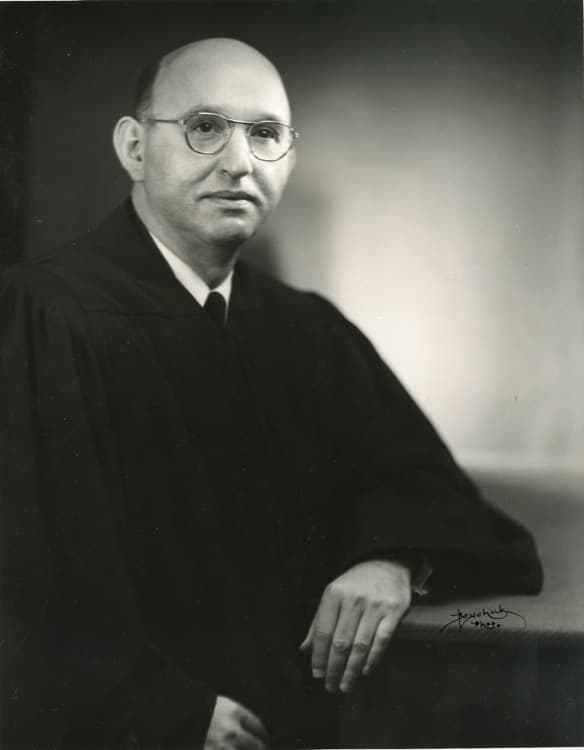
Before his name was on the building,
he stood inside it and argued
the government was wrong.
A South Portland lawyer, a civil libertarian, and Oregon’s first Jewish federal judge. Solomon spent thirty-seven years on this bench. His story is inseparable from the city’s.
Meet Gus SolomonRecording hosted by OHS. If playback is unavailable, listen at the archive ↗.
“My name is Gus Jerome Solomon, and I was born in Portland, Oregon, on August 29th, 1906.”
Rick Harmon / Oregon Historical Society & U.S. District Court of Oregon Historical Society · Educational use permitted.Henry Sorensen
Before the elevators ran themselves, Sorensen worked the lever. Lawyers, jurors and judges passed through his hands on the way up.
Assistant to the referee in bankruptcyNeva Elliott
Hired in 1936, she helped build a bankruptcy court’s everyday practice when there were no local rules to work from.
Opened courtThe court crier
He was paid only when court opened. Solomon recalled opening court on Saturdays so the man could be paid. Solomon didn’t name him.
One building.
Five lives.
The sandstone stayed. Almost everything behind it changed. Follow the occupants, the departures, and what each era left in the fabric of the place.
- 011933–1941
The Federal City
Buy a stamp, enlist, pay a tax, face a jury. The federal government under one roof.
- 021941–1957
War, and the Quiet Hollowing
Wartime crowds fill the offices. Federal agencies begin their quiet departure.
- 031957–1984
The Courts Consolidate
The courts expand into the spaces other agencies leave behind.
- 041984–1997
A Pure Courthouse, and a Doomed One
A courthouse in name and use. Its future is already elsewhere.
- 051997–2026
The Long Afterlife
The courts leave. The rooms grow quiet. A sale opens another chapter.
The story is
still being
found.
We work in this building. In August 2026, Portland Civic Lab moved into the third floor—and began assembling the history scattered across drawings, photographs, newspapers, and people’s memories.
Why we’re doing this ↗