The son of immigrant peddlers who opened his law office the Monday after Black Thursday, survived an antisemitic confirmation fight, and served 37 years on the federal bench.
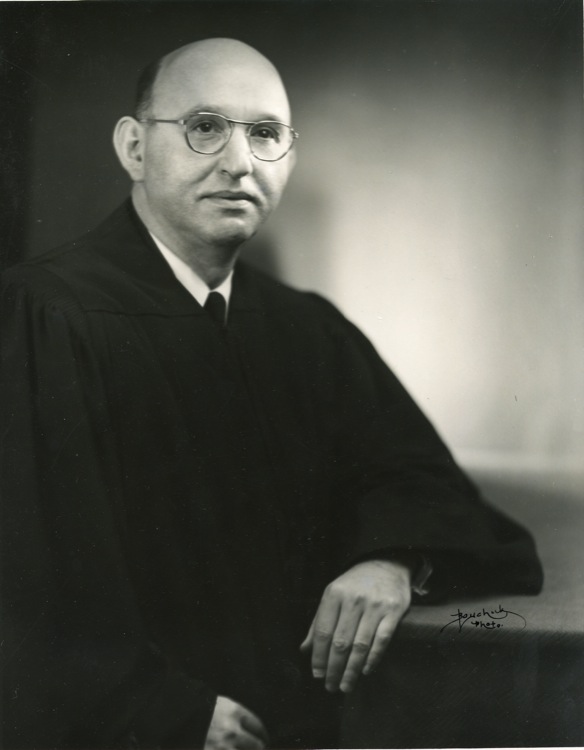
Judge Gus J. Solomon.Courtesy Oregon Jewish Museum and Center for Holocaust Education (OJM01616)
Gus Jerome Solomon was born in Portland on August 29, 1906, the son of East European Jewish immigrants — his father a Romanian-born peddler who built a clothing business serving Oregon logging camps. Solomon entered the University of Washington at fifteen, passed through Reed College and the University of Chicago, and took his law degree at Stanford in 1929. He opened his own Portland practice, as he later put it, the Monday after Black Thursday.
The Depression-era practice he built was unlike any other in town. He helped found Oregon's ACLU chapter and served as appeals counsel in De Jonge v. Oregon, the 1937 Supreme Court landmark on freedom of assembly. He helped establish Portland's Legal Aid Society over bar opposition that branded him a communist. He lawyered for people's utility districts fighting to bring cheap Bonneville Dam power to farmers, argued Oregon's first minimum-wage and Fair Labor Standards Act cases — and, during World War II, was the only Jewish lawyer in Portland to publicly oppose the internment of Japanese Americans, chairing a relocation-aid committee despite threats.
The confirmation fight
President Truman gave Solomon a recess appointment to the U.S. District Court for the District of Oregon on October 21, 1949 — and then the fight began. Opponents red-baited him despite his vocal anti-communism; a former Portland city official traveled to Washington to tell Truman to his face that Portlanders did not want a Jew as a federal judge. Truman disregarded it. The Senate finally confirmed Solomon on June 27, 1950, eight months after he had taken the bench.
Thirty-seven years on the bench
Solomon served as chief judge from 1958 to 1971 and became famous for running the fastest docket in the West — quick rulings from the bench, exacting standards, and procedural innovations that other districts copied. His rulings extended his lifelong civil-rights work: stripping tax exemption from a Portland Elks lodge that excluded Black members, reinstating a teacher fired for being gay under an unconstitutionally vague statute, striking down retirement rules that shortchanged women.
Off the bench he pressured Portland law firms to hire Jewish lawyers and women, refused to join the discriminatory Arlington and University clubs, and campaigned publicly against club discrimination. His philosophy, as the Inn of Court that bears his name summarizes it, was that law should advance human rights, not merely protect property.
Solomon took senior status in 1971 but never stopped working. He died on February 15, 1987, thirty-seven years after his appointment — one of the longest judicial tenures in Oregon history.
The renaming
On October 28, 1988, Public Law 100-543 designated the building the Gus J. Solomon United States Courthouse, with the dedication following in 1989. The full story is told in Harry H. Stein's biography, Gus J. Solomon: Liberal Politics, Jews, and the Federal Courts, published by the Oregon Historical Society Press — and in the twelve and a half hours of oral history Solomon recorded with OHS inside this very building in 1984.
A Portland family
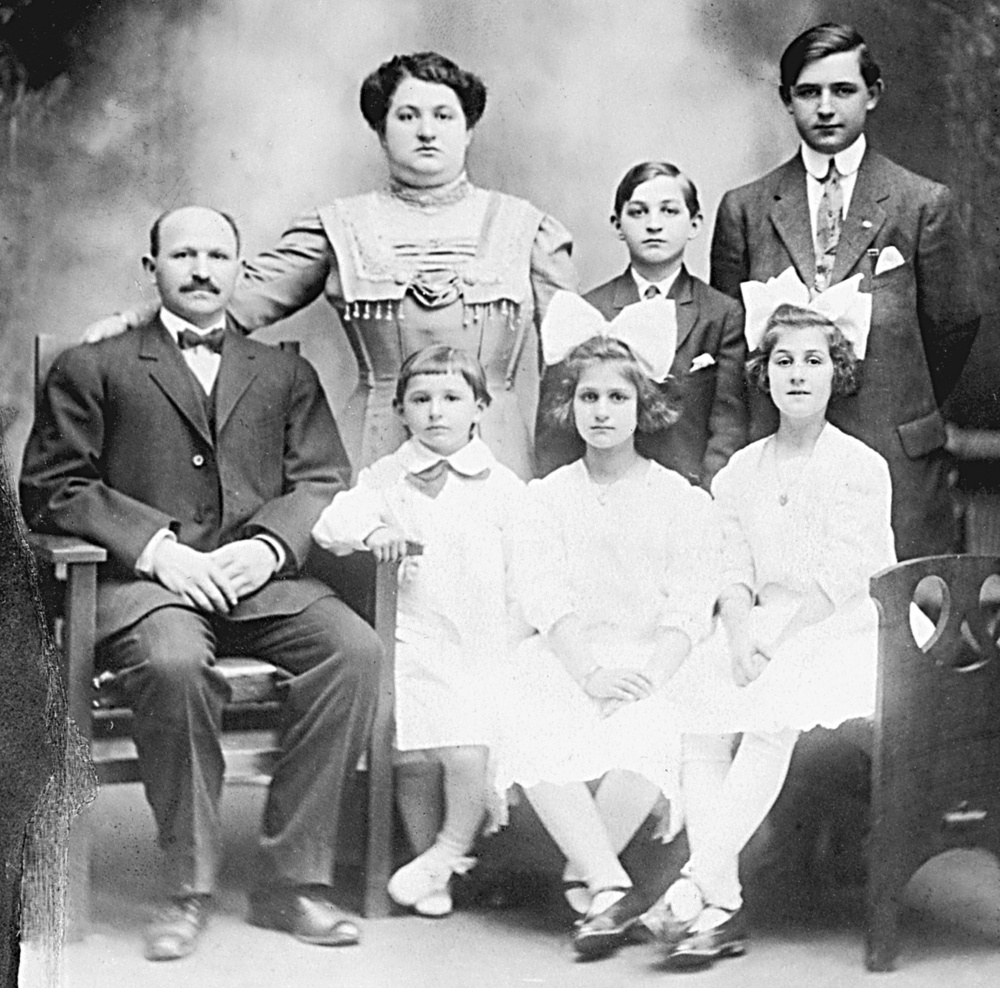
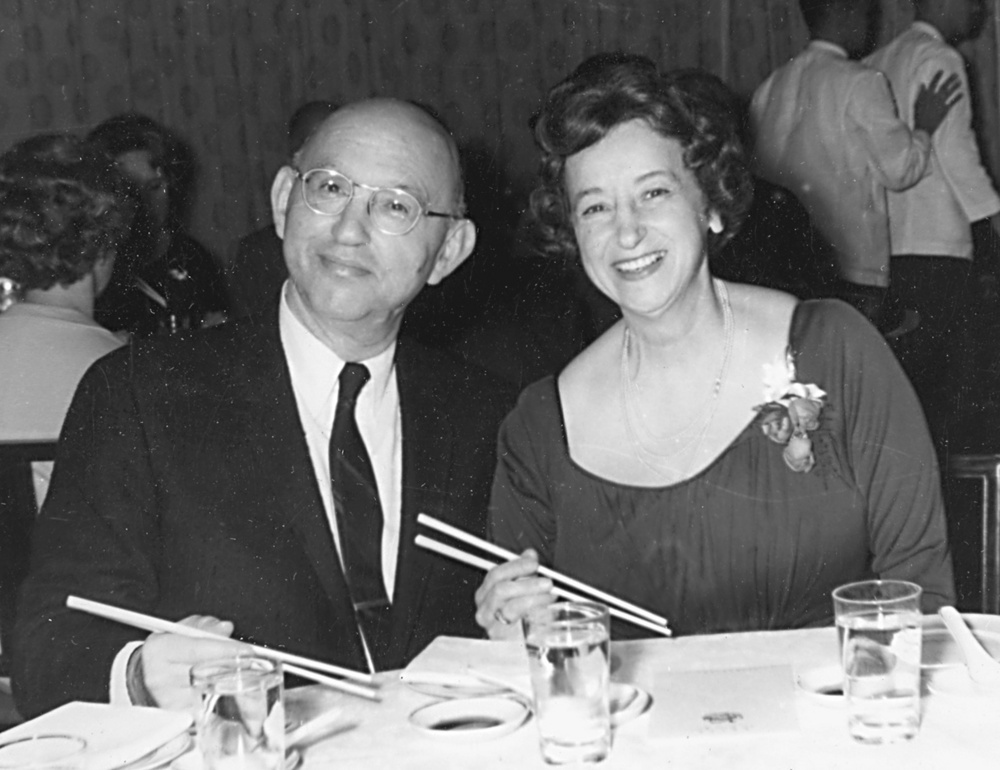
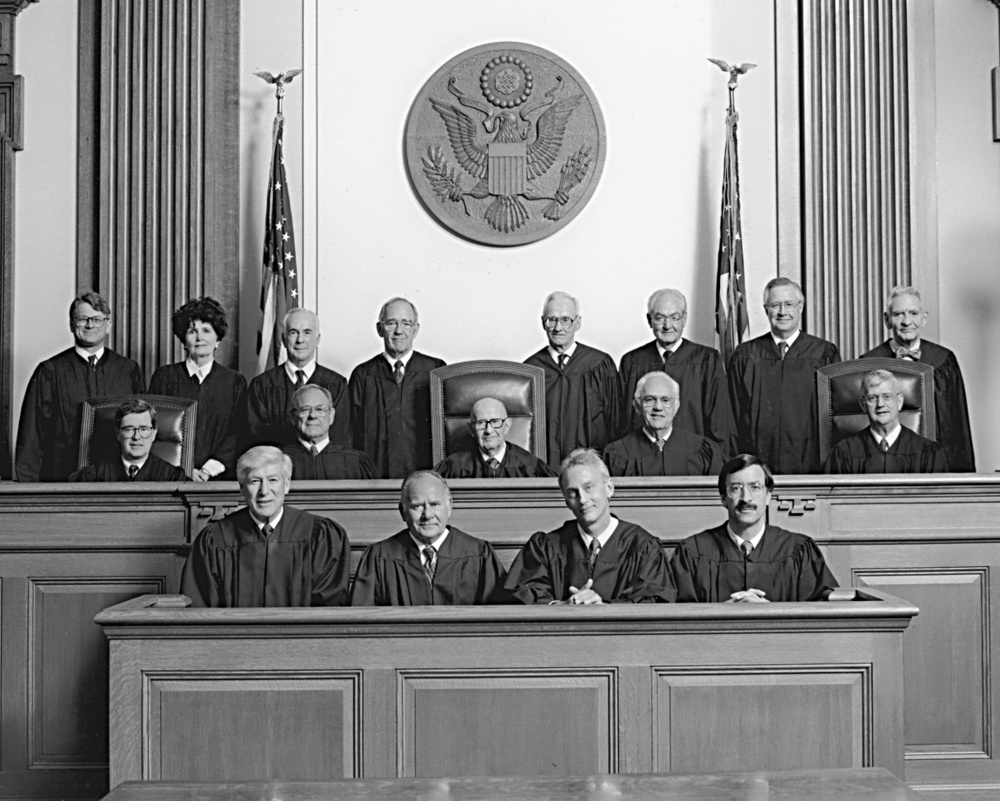
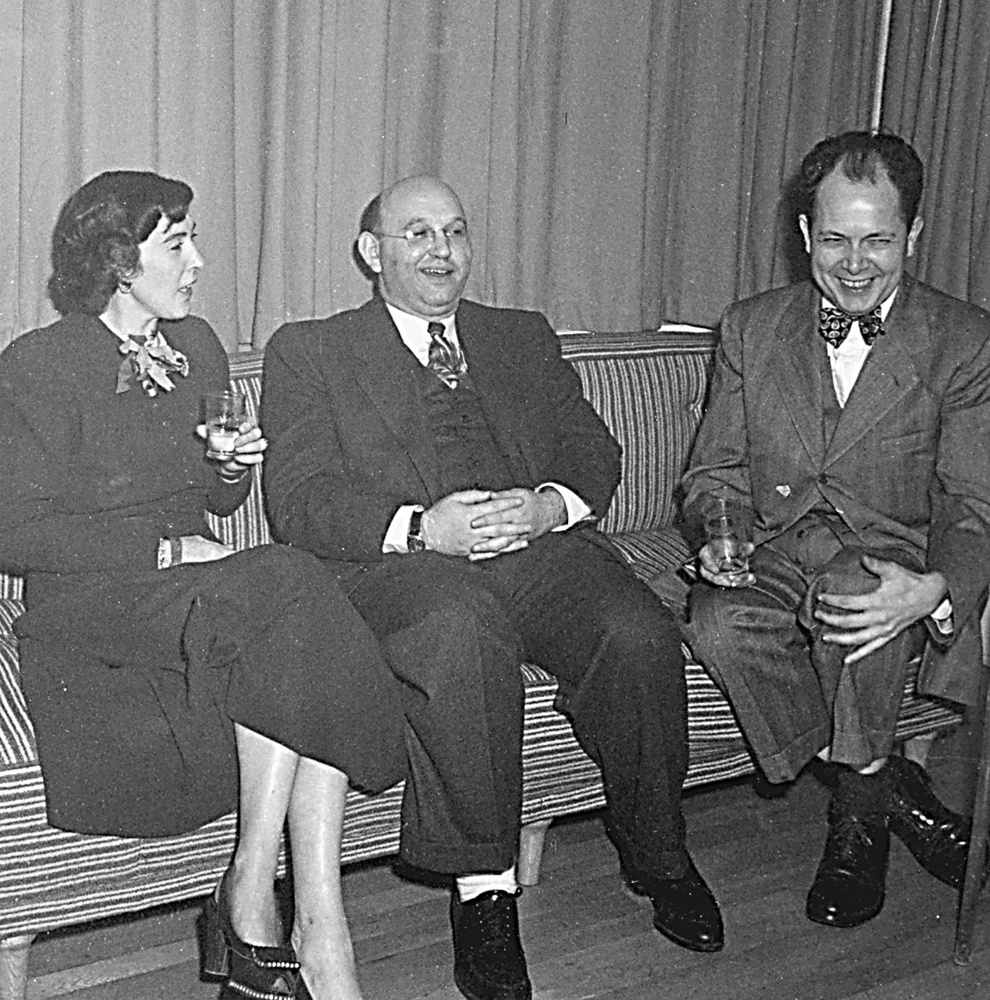
The Solomon family of South Portland, about 1912 — Gus, the youngest, is the small boy at front left, with his parents Jacob and Rose, his brothers, and his sisters.Courtesy Richard SolomonGus and his wife, Elisabeth “Libby” Solomon.Courtesy Richard SolomonSolomon (seated) with fellow members of the federal bench.Courtesy Richard SolomonSolomon with Monroe and Lillie Sweetland — Monroe was a leading figure in rebuilding Oregon's Democratic Party, a cause Solomon shared before he took the bench.Courtesy Richard Solomon
On the Bench
Landmark Rulings
Solomon's civil-rights convictions ran the length of his career — from the young lawyer who helped win a First Amendment landmark to the judge who used the bench to confront racial and anti-gay discrimination. A few of his cases stand out.
As a young lawyer — local appeals counsel
De Jonge v. Oregon
299 U.S. 353 · 1937
Dirk De Jonge was convicted under Oregon's criminal-syndicalism law simply for helping run a peaceful, publicly advertised meeting held under Communist Party auspices. Solomon — then a thirty-year-old Portland lawyer — saw the constitutional principle no one had raised: he wrote the petition that carried the case to the Supreme Court and the brief that argued it, reframing the whole fight around the freedom of assembly (a theory never raised in the Oregon courts), and brought in the ACLU's Osmond Fraenkel to deliver the argument. In 1937 a unanimous Court agreed that peaceable assembly for lawful discussion cannot be made a crime — binding the right of assembly on every state, a cornerstone of modern First Amendment law.
Sitting on a three-judge court, Solomon upheld the state's denial of a property-tax exemption to a Portland Elks lodge because the order barred Black members. The ruling refused to let a public tax subsidy underwrite racial discrimination — part of a national wave of early-1970s cases challenging tax breaks for segregated fraternal clubs. Off the bench, Solomon and his wife had long declined to attend events at clubs that excluded Jews.
From the bench
Burton v. Cascade School District Union High School No. 5
353 F. Supp. 254 (D. Or.); aff'd 512 F.2d 850 (9th Cir. 1975) · 1973
When Cascade High School fired teacher Peggy Burton for being gay — invoking a statute that allowed dismissal for “immorality” — Solomon held the statute unconstitutionally vague and ruled the firing improper. It was a strikingly early defense of a gay teacher's rights, a decade before such cases became common; the Ninth Circuit affirmed the core holding in 1975.
Off the bench, Solomon pressed Portland law firms to hire Jewish lawyers and women, refused to join clubs that discriminated, and campaigned publicly against club discrimination — the same convictions that ran through his opinions. See Sources for the full scholarship on his jurisprudence.
In His Own Voice
The 1984 Oral History
In the summer and fall of 1984, near the end of his life, Judge Solomon sat for a fourteen-hour oral history with Rick Harmon of the Oregon Historical Society — recorded, tape after tape, in his own chambers inside this courthouse. Over 28recordings he traced his whole life: a South Portland boyhood as the son of immigrant shopkeepers, the antisemitism he fought at the bar and on the bench, and the cases that made him one of Oregon’s most consequential judges.
“My name is Gus Jerome Solomon, and I was born in Portland, Oregon, on August 29th, 1906.”— opening words of the first tape, July 23, 1984
Full transcript268 pages, transcribed from all 28 recordings
Two years after Gus died, his widow Elisabeth “Libby” Solomon (1909–2004) sat for her own oral history. Born in Russia in 1909 and raised in Portland, she married Gus in 1939 and was a medical technologist and civic activist in her own right. Across 8 recordings (3 hours 30 minutes across 8 recordings) she recalls her Jewish upbringing, her education, and the life she shared with the judge.